















MSD Iridium Spark Plug 7 1IR6Y
Proper Installation of MSD Spark Plugs Proper Installation of MSD Spark Plugs
Proper Installation of MSD Spark Plugs
Proper procedures must be followed to ensure the best results. While you should always use the vehicle manufacturer’s service procedures, which may include removal of certain engine components to access the spark plugs, here is a basic a step-by-step guide.
1.Make sure that the engine is cool before beginning the removal of spark plugs.
2.Carefully remove the spark-plug boots. Grasp the boot, twist until you feel the boots comes loose from the plug, and then lift it straight off. If the boot does not break free easily, use a spark-plug boot puller. As you remove the boots and ignition wires, number them using tape and a marker.
3.Clean the area around the spark plugs using a blast of compressed air. This prevents debris from falling into the combustion chamber when the old spark plugs are removed.
4.Loosen each spark plug using the correct size hex-head socket wrench.
5.Remove the spark plugs and line them up in cylinder order, this is for inspection of the spark plugs to identify any engine problems that may need attention. (Refer to “Troubleshooting” section.)
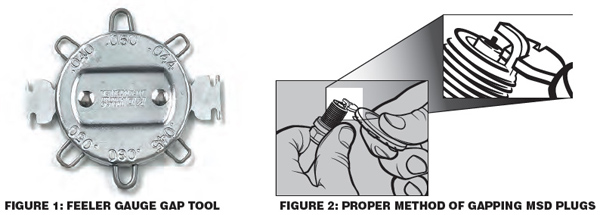
6.As Iridium tip plugs were released, installers used incorrect gap tools and procedures resulting in broken or damage center electrodes. As a result, many installers assumed that one cannot adjust the gap on iridium tip plugs. While the MSD spark plugs are pre-gapped and do not require gapping, there are instances where the gap requires modification. MSD recommends a wire-style or feeler gauge gap tool, (Fig 1) which can adjust the gap without prying against the center electrode, (Figure 2). MSD also recommends adjusting the gap no more than /- 0.008” from the preset gap.
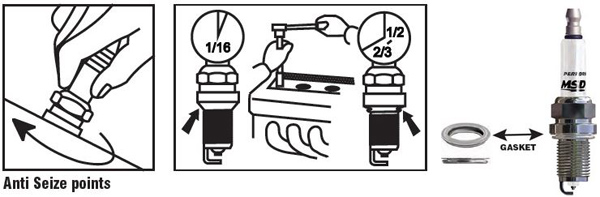
Note: Do not use any anti-seize on the spark plug threads since this may result in overtorquing. MSD plugs are manufactured with a special Zinc-Chromated plating to prevent corrosion and seizure to the cylinder head.
7. Screw the new spark plugs in by hand until just finger tight (Figure 1). If it is difficult to reach the spark plug socket, use a length of rubber hose to extend your reach.
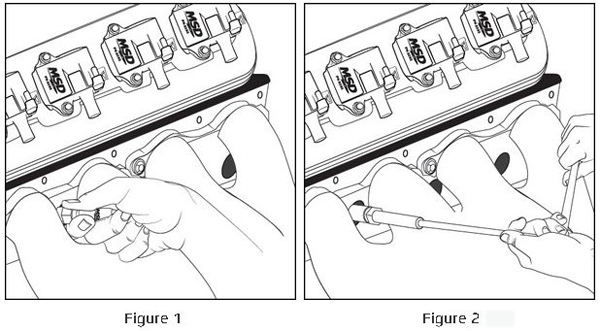
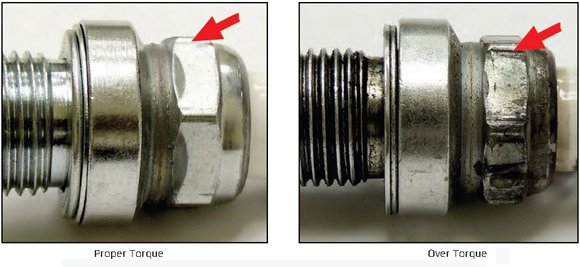
8. Tighten the spark plugs using a torque wrench and following the vehicle manufacturer’s recommendations (Figure 2). If you do not have a torque wrench, use the tightening chart.
9. Before replacing the ignition wires and spark-plug boots, check them for any cracks or brittleness, or obvious signs of corrosion or wear. Replace the entire set if you detect any of the above defects.
10. Place a small amount of dielectric grease inside the spark-plug boot where it connects to the spark-plug barrel. This will help ensure a tight, moisture resistant seal and help resist flashover.
11. Replace the spark-plug wires in the correct order, following your marks. Make sure that the ignition wires are routed correctly and will not come into contact with hot engine components.
12. Start the engine. If the engine misfires or idles badly, shut it off and double-check that the ignition wires are not crossed or connected poorly. Check the firing order and all the connections carefully.
Supression of Quenching EffectSupression of Quenching Effect
Supression of Quenching Effect
The zone conducting heat from the combustion core in the initial phase at cold start. At cold start it is very important to prevent conducting of the heat from the combustion core by the cold electrodes. Convenient design can fundamentally decrease the surfaces which cool the flame core in the first phases after cold start.
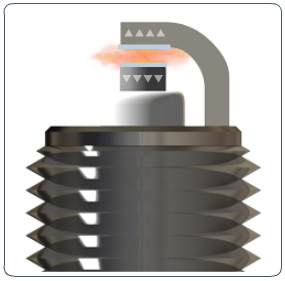
Large parallel surfaces take a large amount of heat to the cold electrodes at cold starts and they can cause the core to die in the first phases of burning.
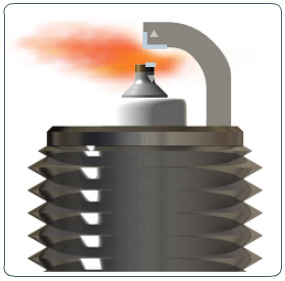
Small surfaces of the electrodes in the flame core zone substantially limit the amount of heat conducted to the cold electrodes in the initial phase of combustion. At the same time, they do not inhibit spreading of the flame front to the combustion chamber during usual operation.
MSD Spark Plugs suppress the flame quenching at cold starts much better than most of the competitive products.
Recommended Torque Specifications Recommended Torque Specifications
Recommended Torque Specifications
All engine manufacturers have recommended torque specifications for spark plug installation. Most are represented in the chart below. When installing the spark plug, finger tighten until the gasket or tapered seat makes contact with the cylinder head, then give it the recommended turn or angle.
| Spark plug type | Thread Diameter | Cast Iron Cylinder Head (lb-ft.) | Aluminum Cylinder Head (lb-ft.) | Without Torque Wrench Cast and Aluminum |
| Gasket Seat | 14mm | 18-25 | 18-21 | 1/2 - 2/3 Turn |
| Spark plug type | Thread Diameter | Cast Iron Cylinder Head (lb-ft.) | Aluminum Cylinder Head (lb-ft.) | Without Torque Wrench Cast and Aluminum |
| Tapered Seat | 18mm | 14-22 | 14-19 | 1/2 - 1/8 Turn |
| Tapered Seat | 16mm | 18 - 25 | 15-21 | 1/2 - 1/8 Turn |
| Tapered Seat | 14mm | 11-18 | 7 - 14 | 1/2 - 1/8 Turn |
| Tapered Seat | 12mm | 10 - 18 | 7 - 18 | 1/2 - 1/8 Turn |
Note: Do not use any anti-seize on the spark plug threads since this may result in over-torquing. MSD plugs are manufactured with a special Zinc-Chomated plating to prevent corrosion and seizure to the cylinder head.
Spark Plug Diagnostic GuideSpark Plug Diagnostic Guide
Spark Plug Diagnostic Guide
| Failure | Cause | Consequences | Images |
| Improperly adjusted ignition system | Spark advance (from a proper moment) | Pre-ignitions-Detonation burning | 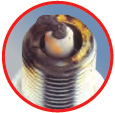 |
| Spark delay (from a proper moment) | Excessive formation of combustion deposits | 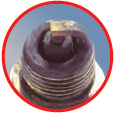 |
|
| Improper air/fuel ratio | Rich mixture | Excessive formation of combustion deposits | 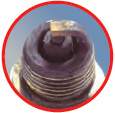 |
| Lean mixture | Pre-ignitions-Detonation burning | 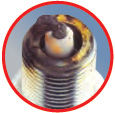 |
|
| Low or no performance of the air filter | Dust penetration into the combustion area | Excessive deposits | 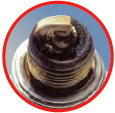 |
| Filter impassability | Excessive formation of combustion deposits | 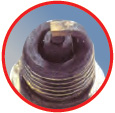 |
|
| Compression pressure | Low | Excessive formation of combustion deposits | 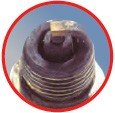 |
| Improperly selected spark plug | Too hot | Pre-ignitions-Detonation burning | 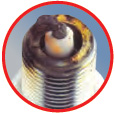 |
| Too cold | Excessive formation of combustion deposits | 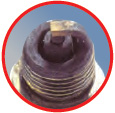 |
|
| Perfect performance of the spark plug | 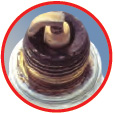 |