
















APR CPS Radiator Fit Kit - 3.0 TFSI - B8 S4/S5
Se requiere este kit de ajuste para que se ajuste al sistema APR CPS a los vehículos C7 (antes de Facelift) y B8 (Pre Facelift).
.Características
- Dramáticamente reduce la temperatura del aire de admisión (IAT)
Aumenta y retiene HP mientras minimiza el sobrecalentamiento que roba potencia. - Área frontal de superficie masiva (núcleo) y volumen (radiador)
29" x 05.5" x 2.1" - 159.5"² & 054"³ - OEM B8
22" x 17.4" x 1.7" - 382.8"² & 130"³ - APR - Diseño de núcleo de doble paso altamente efectivo
Aletas externas con lamas estrechamente empaquetadas disipan rápidamente el calor a medida que el refrigerante fluye a través de los conductos internos de enfriamiento. - Sistema de auto-sangrado y auto-optimización
¡Las burbujas de aire atrapadas dentro del sistema afectan el rendimiento! ¡El sistema de auto-sangrado elimina constantemente el aire del sistema, sin necesidad de intervención manual! - Mantiene la seguridad y el control de fábrica
La ECU retiene el control total sobre el sistema, protegiendo contra fallas de la bomba y fugas de refrigerante. - Fácil de instalar y mantener.
Todas las actuaciones sin los dolores de cabeza. Cada sistema se somete a pruebas de presión completas después del ensamblaje.

System Overview
The 3.0 TFSI uses a liquid-to-air intercooling cooling circuit. A front mounted radiator is responsible for cooling hot coolant, while two heat exchangers within the supercharger are responsible for cooling the supercharged air before it enters the engine. The turbocharged 4.0 TFSI uses a similar system with a single heat exchanger after the turbochargers.

The Problem:
The front mounted radiator is tiny. Air trapped within the system devastates the cooler’s effectiveness, while the sheer lack of surface area and coolant volume makes for a system incapable of keeping up with the cooling demands at higher performance levels.
The APR Solution:
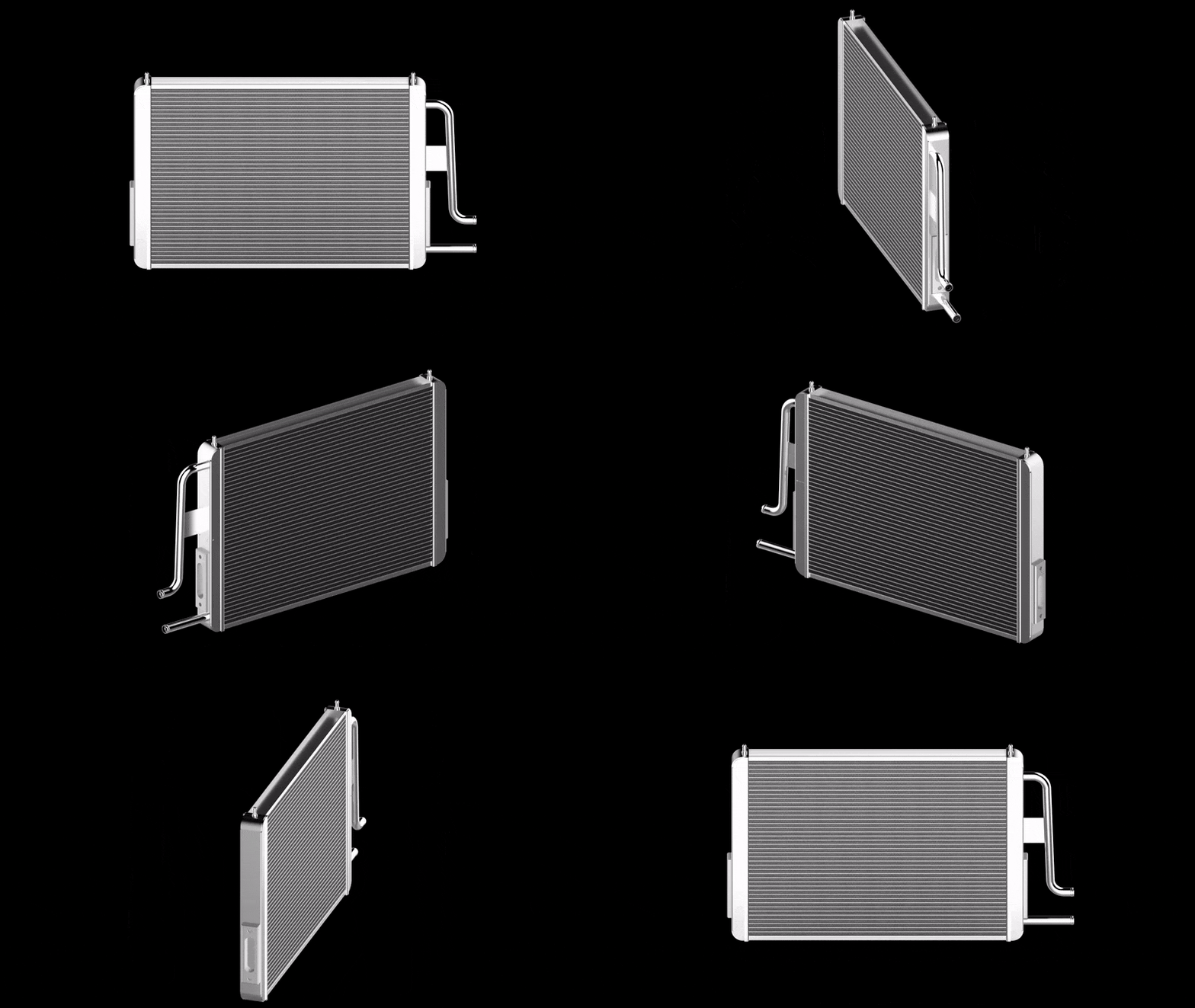
The APR Coolant Performance System replaces the front mounted radiator with a much larger and more capable dual-pass unit. It has 140% more frontal surface area and holds 141% more coolant than the factory B8 unit. Tightly packed louvered fins rapidly dissipate heat over a much wider area than the factory unit.
Next, APR CPS incorporates a unique self-bleeding system into the cooler design. Keeping up with manual bleeding is messy, and all but impossible. However, the APR system continuously self-bleeds, increasing the coolers effectiveness automatically!
The result is simple: More horsepower over a much wider operating range!

Testing
APR’s engineers conducted a multitude of tests on the street, dyno, dragstrip and race track with thermocouples placed at the inlet and outlet of the radiator during the design phase. Data from these tests were used to choose the radiator design available today. With the radiator in its final production form, tests were conducted against the factory radiator to measure the effectiveness of each system.

Testing conducted on the dyno provided a semi controlled environment for back-to-back stress testing the two systems. Utilizing a B8 S4 3.0T at APR Stage II+ Ultra power levels, six back-to-back dyno pulls were conducted with minimal cooldown time between runs. APR’s ECU Explorer high resolution datalogging system was used for raw sensor data collection.
Using the APR Radiator, horsepower remained consistent for the first four back-to-back dyno pulls. By the fifth back-to-back pull, horsepower dropped slightly when the IAT protection threshold was crossed. The threshold is designed to bypass boost pressure to cool off the system and protect the engine.

The OEM intercooler did not fare so well. Horsepower began derating on the first pull and the IAT threshold was crossed by the end of the first dyno pull. This trend continued dramatically, resulting in massive power losses to protect the engine from excessive intake air temperature. The factory cooling system simply did not stand a chance. Ultimately peak horsepower dropped to as low as 260 AWHP, whereas the APR cooling system retained over 400 AWHP, even after the sixth consecutive back-to-back pull!
Application Guide
| Make | Model | Generation | Market | Engine | Requirements |
|---|---|---|---|---|---|
| Audi | A4 | Typ 8K - (B8.5) | All | 3.0 TFSI | |
| Audi | A5 | Typ 8T - (B8.5) | All | 3.0 TFSI | |
| Audi | A6 | Typ 4G - (C7) | All | 3.0 TFSI | Some require the fit kit per this guide. |
| Audi | A6 | Typ 4G - (C7.5) | All | 3.0 TFSI | |
| Audi | A7 | Typ 4G - (C7) | All | 3.0 TFSI | Some require the fit kit per this guide. |
| Audi | A7 | Typ 4G - (C7.5) | All | 3.0 TFSI | |
| Audi | Q5 | Typ 8R | All | 3.0 TFSI | |
| Audi | S4 | Typ 8K - (B8) | All | 3.0 TFSI | Requires the fit kit. Some require relocating the ADS cooler. |
| Audi | S4 | Typ 8K - (B8.5) | All | 3.0 TFSI | |
| Audi | S5 | Typ 8T - (B8) | All | 3.0 TFSI | Requires the fit kit. Some require relocating the ADS cooler. |
| Audi | S5 | Typ 8T - (B8.5) | All | 3.0 TFSI | |
| Audi | S6 | Typ 4G - (C7) | All | 4.0 TFSI | |
| Audi | S6 | Typ 4G - (C7.5) | All | 4.0 TFSI | |
| Audi | S7 | Typ 4G - (C7) | All | 4.0 TFSI | |
| Audi | S7 | Typ 4G - (C7.5) | All | 4.0 TFSI | |
| Audi | SQ5 | Typ 8R | All | 3.0 TFSI | |
| Some vehicles with Audi Drive Select (ADS) have a factory dynamic steering cooler, which must be relocated. This cooler is visible through the top of the grill. | |||||