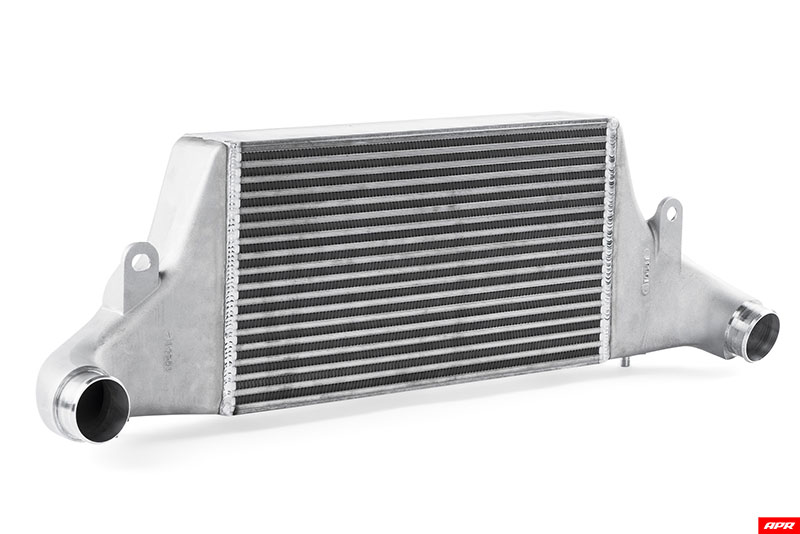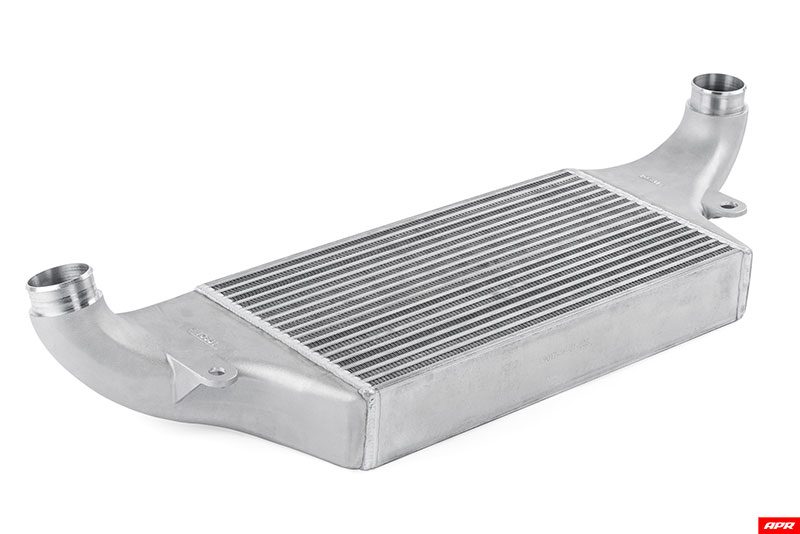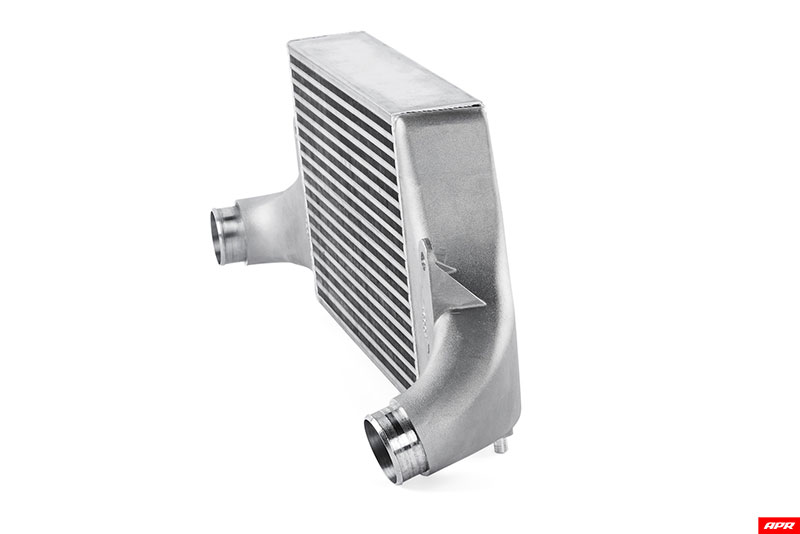
















APR Intercooler System for Audi 2.5 TFSI EVO (TT RS)
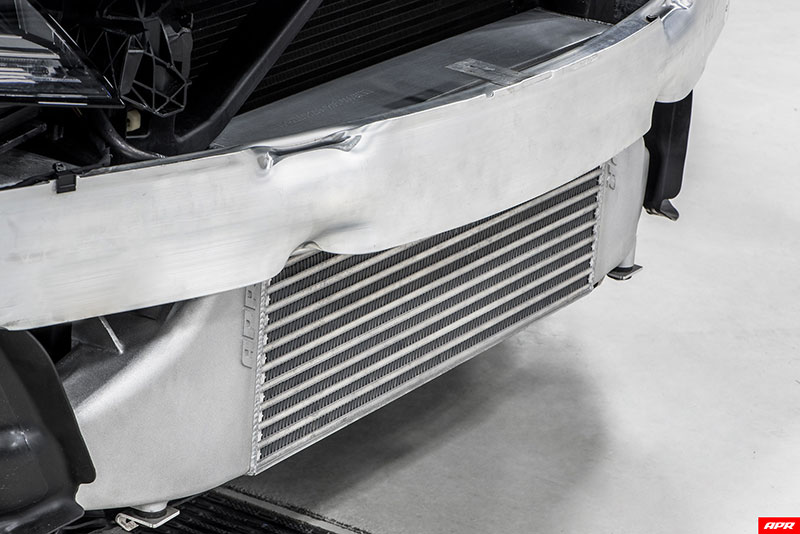
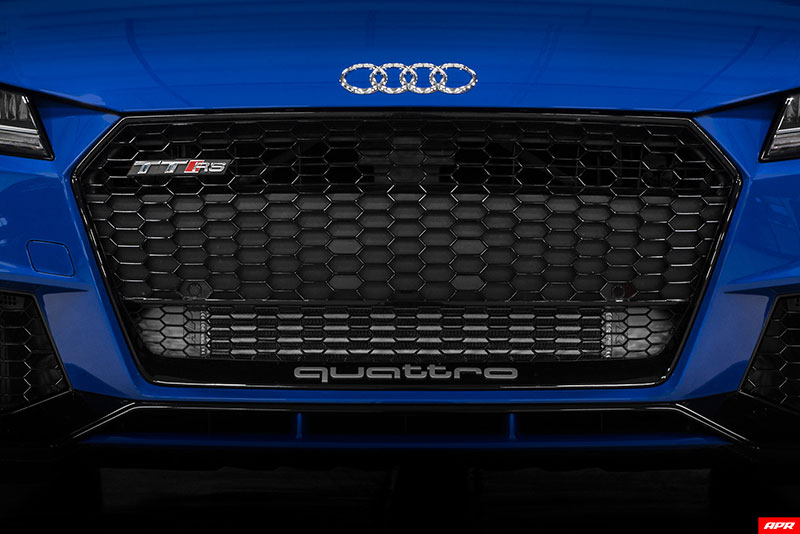
The APR Intercooler System is a massive front mounted upgrade that dramatically reduces intake air temperature (IAT), minimizes heat soak, and provides increased performance! The system is easy to install, direct bolt-on design, that is recommended at every stage of performance.
Caractéristiques
- Diminue considérablement la température de l'air d'admission (IAT)
Augmente les HP tout en minimisant la surchauffe qui vole de la puissance !
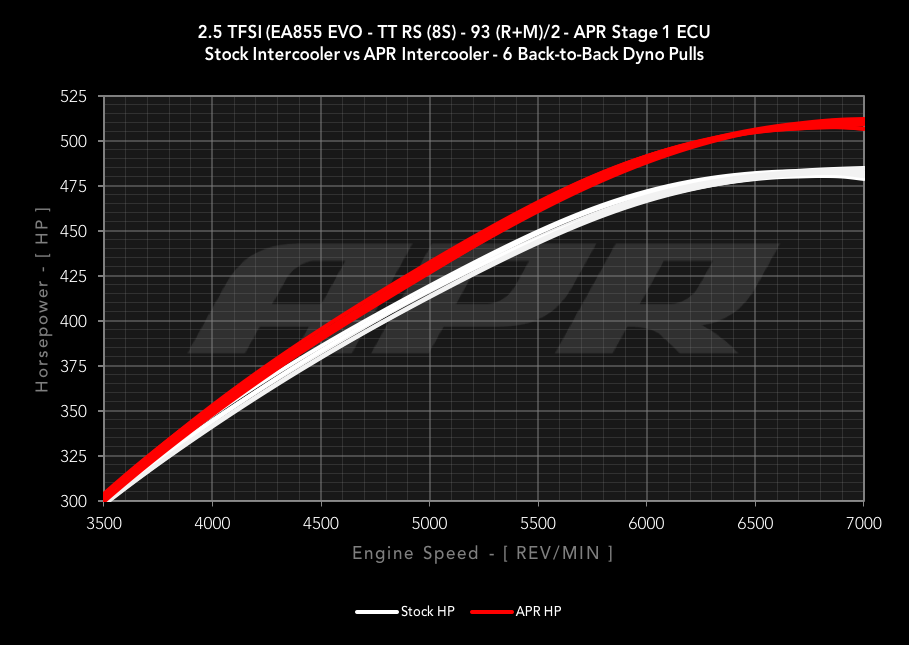
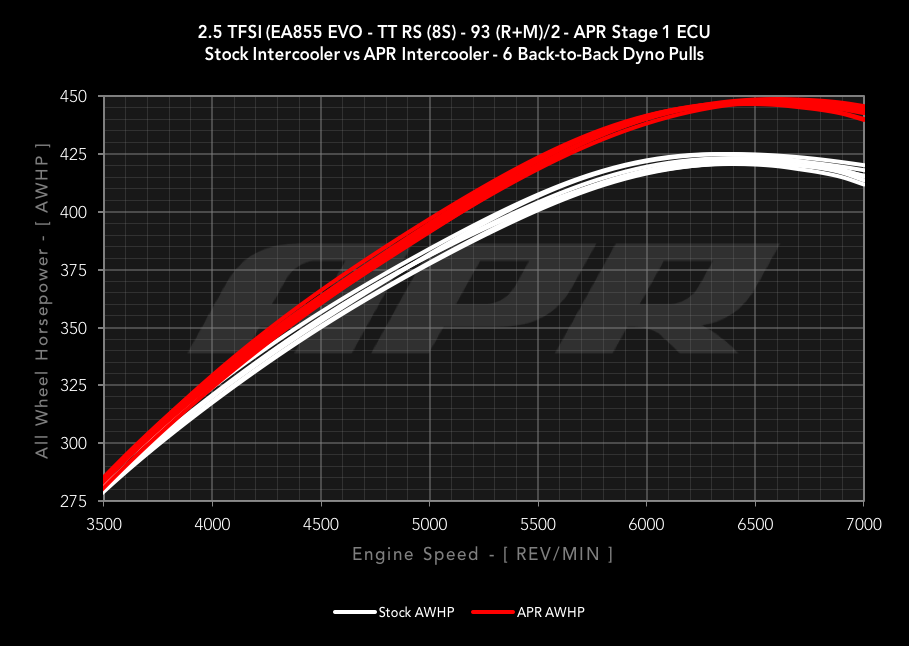
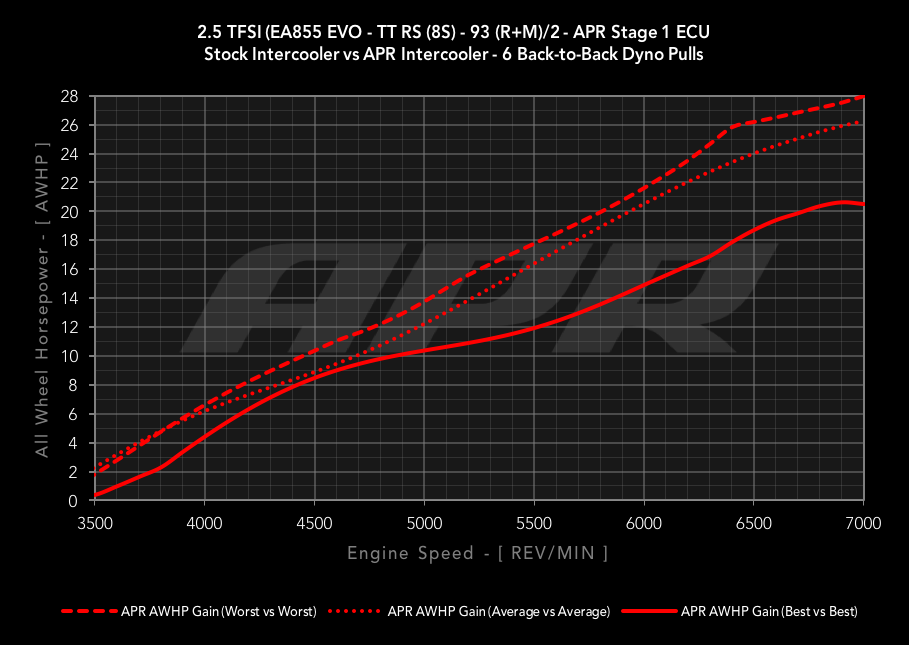
Dynoed 26 AWHP over to the factory system (STG 1 93)!
Refroidissement efficace pour des niveaux de puissance d'usine plus que doublés ! - Surface frontale massive et volume central
6.38" x 25.33" x 3.16" - 161.6 in² frnt. & 510.67 in³ volume - OEM
10,4" x 22,00" x 3,50" - 228,8 in² frnt. & 800,8 in³ volume - APR - Conception de noyau hautement efficace
Noyau à barres et plaques avec ailettes décalées et à persiennes.
Des tests rigoureux ont déterminé le style de base, la densité des ailettes et la taille.
Faible perte de pression + refroidissement hautement efficace = haute performance! - Réservoirs d'extrémité moulés lisses
Conçu pour une faible turbulence/restriction et un débit maximal.
Organically shaped to promote airflow across entire core.
Testé sous pression pour prévenir les fuites de suralimentation qui volent de la puissance. - Facile à installer
Conception simple plug-and-play sans besoin de découpe ou de perçage ! - Conçu par des ingénieurs avec des lasers
Avec le meilleur équipement et les ingénieurs les plus intelligents, ça fonctionne simplement !
Testing
APR’s engineers tested each intercooler in a multitude of tests to show the impact the APR intercooler has on intake air temperature. The following tests were conducted with a 2018 RS3 using our APR Stage 1 ECU Upgrade, 93 octane fuel and no other modifications. Ambient conditions during the stock intercooler tests were 78.5°F and 98.06 kPa with 60.47% relative humidity. Conditions were far worse later in the day during during the APR Intercooler testing with 87.2°F and 98.03 KPa with 42.18% relative humidity. This gave the APR Intercooler no added advantage over the stock system during the tests.
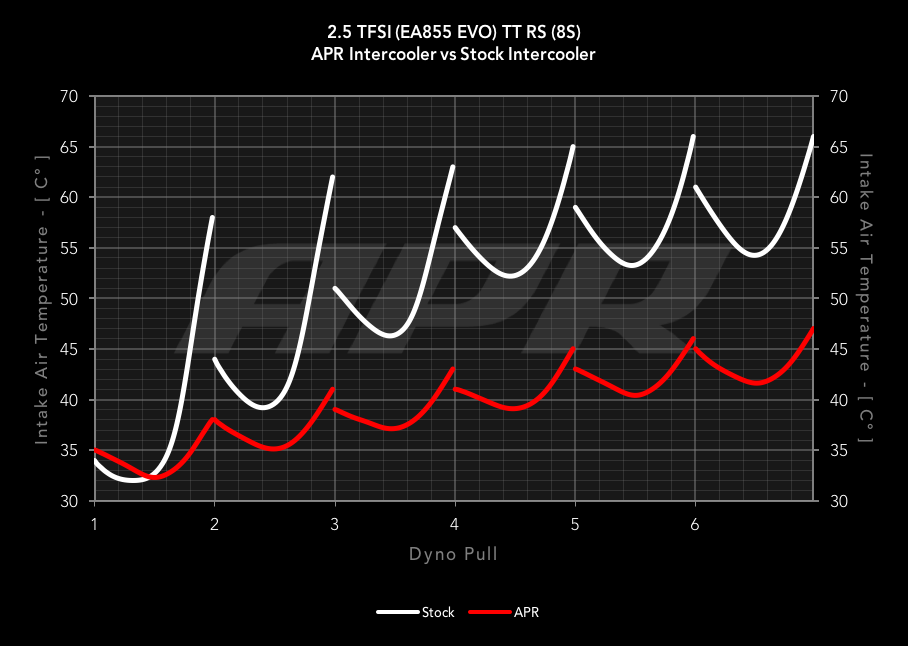
First, six back-to-back dyno pulls were conducted with each intercooler. Each run was conducted in 4th gear, from idle to redline, with a cool down between runs. The stock intercooler failed to combat rising IAT’s and quickly exhibited power-robbing heat soak. IAT’s started at 42°C and quickly rose to 58°C by the end of the first dyno pull. This trend continued with the final dyno pull reaching a staggering 70°C! In contrast, the APR Intercooler started at the same temperature and only reached 44°C by the end of the first dyno pull. It was then able to continue rejecting heat, only reaching 54°C by the end of the final dyno pull. The APR Intercooler performed better after 6 back-to-back dyno pulls than the factory intercooler did on it’s very first dyno pull.
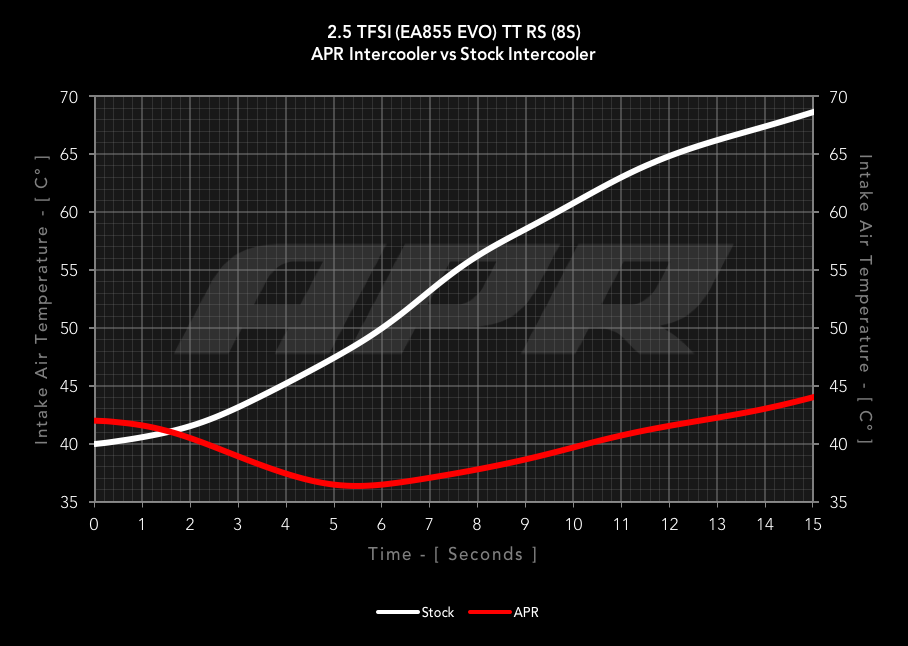
Next we tested a 15-second sprint through the gears. With the factory intercooler, IAT quickly rose from a starting temperature of 37°C to a blistering 64°C! However, as expected, the APR intercooler handled IAT’s extremely well. With a starting temperature of 38°C, IAT dropped to as low as 33°C before slightly climbing above the starting temperature to 40°C by the end of the sprint. A difference of 23°C was exhibited between the two units after only a single 15 second sprint. This directly translates to faster acceleration, and better performance in all conditions.
The temperature difference between the stock and APR intercooler directly translates to more horsepower. Comparing best vs best, worst vs worse, and average vs average dynos from both systems, the APR Intercooler laid down 26 AWHP over stock in every scenario. This is easily one of the best dollar-per-horsepower hardware modifications one can make on this platform and highly recommended for anyone at any stage!
Dyno Testing
Design
Unfortunately, to the untrained eye, many intercooler designs appear the same. However, effectiveness of the system and overall performance are greatly determined by several key metrics. Alloy selection, end tank design, construction type, fin style, fin density and overall core dimensions must be analyzed and balanced accordingly to deliver class-leading performance. While the OEM’s goal is to create a lightweight, easy to manufacture and inexpensive to produce, cross-platform design capable of supporting factory power levels, APR’s intercooler must be capable of supporting more than double the factory output. Achieving this goal took a multi-step approach focused around intercooler core selection, end tank design and install location.
Intercooler Core Design
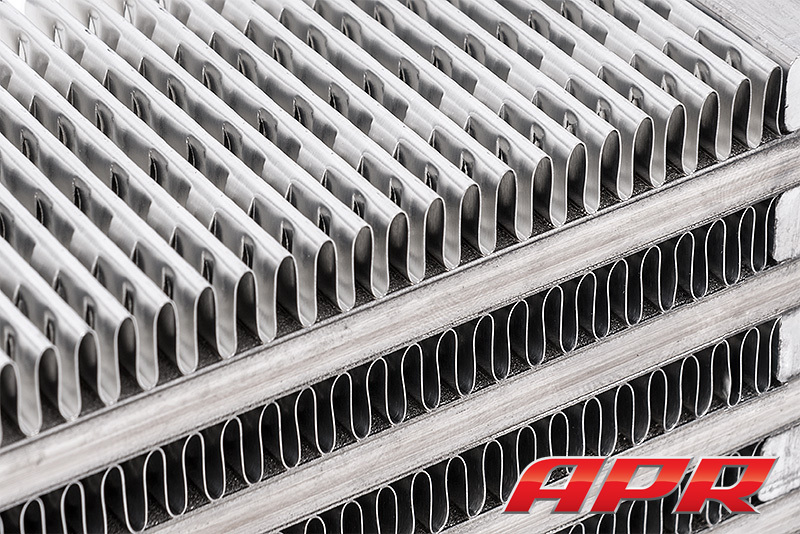
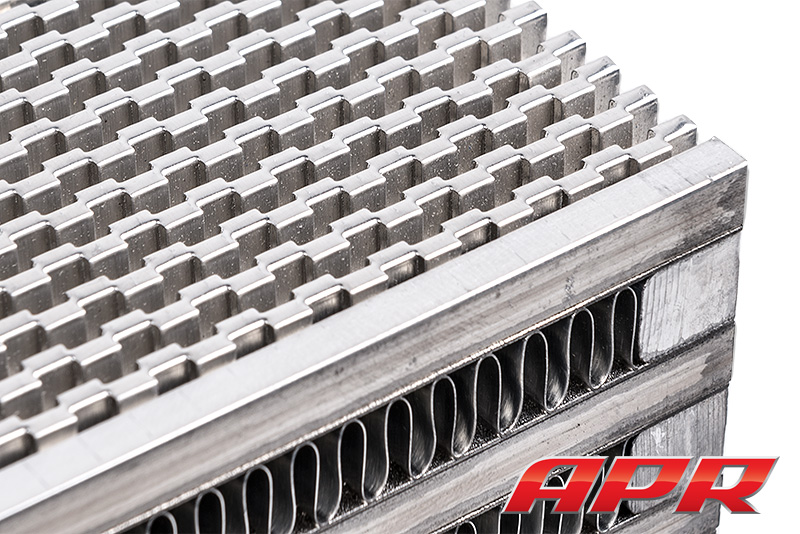
The APR Intercooler core is a large bar-and-plate design featuring densely packed staggered and louvered fins. This design offers exceptional cooling while balancing pressure loss across the core, and maintaining critical airflow to the components behind the intercooler system. The core size was appropriately matched to the platform, minimizing pressure drop while leaving adequate space for appropriately designed end tanks. To APR’s mechanical engineering experts, the design represented the ultimate in performance, far exceeding the capabilities of the factory intercooler. To the driver, the result is simple: Repeatable performance, even in the most demanding of situations!
Core Style / Internal Fin Structure:
APR’s Engineers paid close attention to the balance between core effectiveness and pressure drop through the core, core style and fin density. With fin density too low, pressure drop decreases dramatically, but typically results in a core incapable of effectively cooling. Likewise, with fin density too great, pressure drop increases dramatically, resulting in the turbocharger working harder, and hotter, to produce the same level of airflow. By fine tuning this often unseen balancing act, as illustrated below, APR’s Engineers were able to maximize performance.
| System | Core Type | Thickness | Width | Height | Volume | Frontal Area |
|---|---|---|---|---|---|---|
| OEM | Tube and Fin | 3.16" | 25.33" | 6.38" | 510.6 in³ | 161.6 in² |
| APR | Bar and Plate | 3.5" | 22" | 10.4" | 800.8 in³ | 228.8 in² |
The APR system increases frontal surface area by 119.09% and has a 58% larger core!
Intercooler End Tank Design
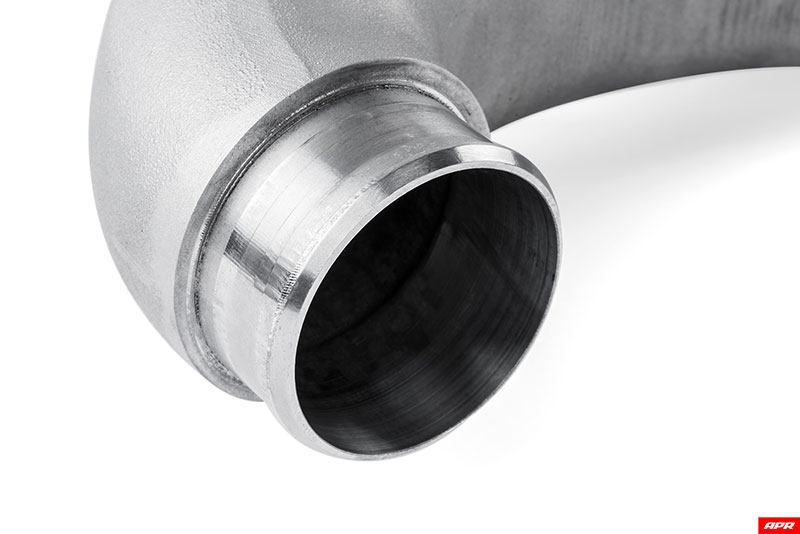
To fully utilize the massive core, APR’s mechanical engineers designed cast aluminum end tanks organically shaped for proper airflow distribution across the entire core. By correctly sizing the intercooler core, end tank design was not sacrificed. The one-piece end tanks are CNC machined to provide a slip resistant mounting surface for hoses, precise integrated mounting surfaces, and perfectly flat connecting surfaces used for TIG welding the tanks to the core. Through proper alignment in welding jigs, each unit is assembled to tight tolerances for a precise and accurate fit.